Slot machines have come a long way from the mechanical pull-tab devices that sat in the corners of saloons over a century ago. Today, whether situated on the glowing floors of modern casinos or accessed through digital screens, slot machines are among the most sophisticated engagement engines in the global entertainment industry.
While graphics and themes catch the eye, the true power of a modern slot machine lies beneath the surface. Every spin, visual animation, sound effect, and payout calculation is engineered using established principles of behavioral psychology, neuroscience, and human-computer interaction. Understanding the psychological mechanics behind slot machine design reveals how these games hold player attention, create immersive environments, and turn simple probability into compelling interactive entertainment.
Variable Ratio Reinforcement Mechanics
At the heart of slot machine design is a psychological concept identified by behavioral scientist B.F. Skinner: the variable ratio schedule of reinforcement. In his experiments, Skinner discovered that organisms—whether laboratory animals or human beings—exhibit the highest rates of engagement and resistance to stopping when rewards are delivered unpredictably after an uncertain number of actions.
If a slot machine paid out a fixed reward every five spins, the player would quickly anticipate the pattern, experience boredom, and leave. Conversely, if rewards were too sparse, interest would wane due to lack of feedback.
Modern slot machines utilize algorithms to space out payouts unpredictably. A player might experience five losing spins in a row, followed by a small win, two more losses, a medium win, and then a long dry spell before a bonus feature triggers. This fundamental unpredictability keeps the brain in a state of heightened expectation, releasing dopamine—the neurotransmitter responsible for motivation and reward anticipation—not just when a win occurs, but during the anticipation leading up to the result.
The Neurochemistry of Losses Disguised as Wins
One of the most powerful psychological design features in modern multi-line video slots is the phenomenon known as Losses Disguised as Wins, or LDWs.
In traditional single-line mechanical slots, an outcome was binary: the symbols lined up and paid out, or they missed and returned nothing. Modern digital slots, however, routinely feature dozens, hundreds, or even thousands of paylines across a single reel set. This structural change allows for complex multi-line outcomes.
Consider a player who wagers two dollars on a single spin across twenty active paylines. The reels stop, celebratory music plays, screen graphics flash brightly, and the machine counts up a payout of fifty cents. From a purely financial standpoint, the player has lost one dollar and fifty cents on that spin.
However, the sensory feedback—the celebratory audio fanfares, flashing lights, and visual tally counters—mirrors the exact feedback provided during a true winning spin. Functional brain imaging studies reveal that human brains often process LDWs similarly to actual net wins. The cognitive system registers the sensory celebration rather than the net financial loss, reducing the psychological impact of losing and sustaining motivation to continue playing.
Sensory Overload and Cognitive Entrainment
Modern slot cabinets and digital applications are total sensory environments carefully calibrated to encourage a state of deep focus often referred to by game designers as the flow state, or the machine zone.
Sound Design and Auditory Cues
Audio design in slot machines is far from random background noise. Soundscapes are composed using specific musical keys and harmonic intervals designed to elicit positive emotional responses. Winning sounds are composed in C major or other bright major keys, which human ears naturally associate with accomplishment and joy.
Crucially, modern machines minimize harsh, jarring sounds on losing spins. Instead of silence or an unpleasant buzz, a non-winning spin is accompanied by ambient, relaxing soundscapes or subtle reel-stopping clicks, ensuring the player remains calm and unperturbed.
Visual Architecture and Lighting Dynamics
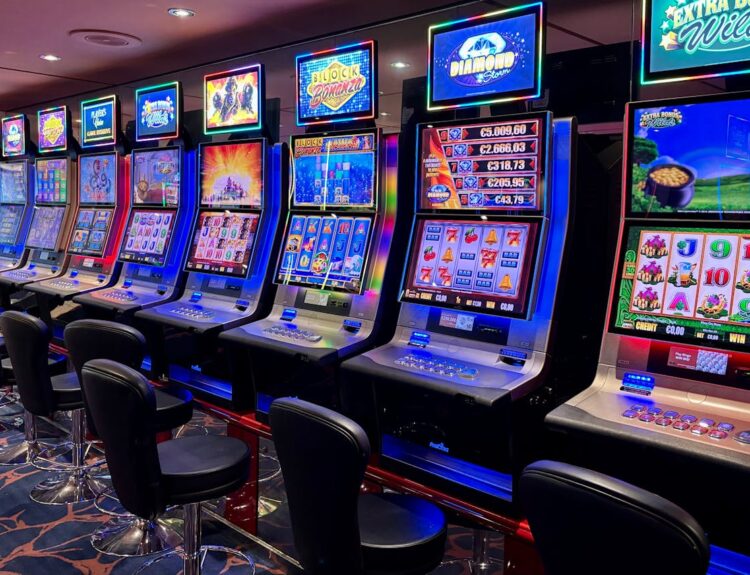
Visuals are crafted to capture visual attention immediately. High-definition screens feature rich color palettes, animated characters, and particle effects. Physical cabinets use ergonomic seating, angled monitors, and reactive LED lighting synced with the game action to eliminate outside distractions, helping the player isolate themselves from the surrounding environment.
Near Misses and the Perception of Control
Another psychological mechanism engineered into slot mechanics is the near miss. A near miss occurs when an outcome stops just short of a high-value jackpot or bonus feature—for example, when two out of three scatter symbols land on the first two reels, and the third scatter lands one position away on the final reel.
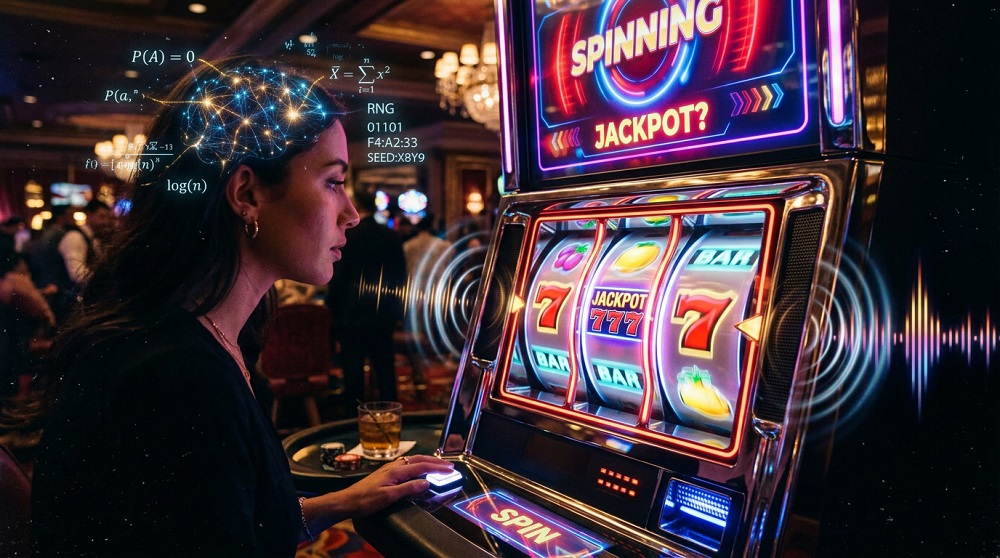
From a mathematical perspective, a near miss is identical to any other losing spin; the random number generator calculated a non-paying result. However, psychologically, human beings do not interpret a near miss as a total loss. Instead, the brain processes it as an indicator that a win is close or that the current strategy is nearly working.
This cognitive misinterpretation triggers a surge of dopamine similar to an actual winning outcome, encouraging the player to try again. Game designers enhance near misses by slowing down the final reel or adding dramatic audio tension, amplifying anticipation and emotional engagement.
The Illusion of Control
Modern slots frequently incorporate interactive choices that give players a sense of agency, even when the overall outcome is governed by a certified random number generator. Examples include:
-
Manual Stop Buttons: Allowing players to press a button to stop the spinning reels prematurely, creating the impression that timing influences the outcome.
-
Pick-Me Bonus Rounds: Presenting players with a grid of hidden symbols to select, making them feel personally responsible for the bonus prize revealed.
-
Skill-Adjacent Features: Offering themed mini-games with arcade-style visuals that simulate skill-based interactions.
These elements foster an illusion of control, leading players to attribute favorable results to personal skill or timing while dismissing poor outcomes as temporary bad luck.
Ergonomics and Frictionless Interaction
Physical comfort and operational ease play vital roles in sustaining play sessions. Slot machine manufacturers invest heavily in ergonomic engineering to eliminate physical fatigue and operational friction.
Physical cabinets feature padded wrist rests, intuitive button layouts positioned at natural arm rest levels, and high-definition screens angled to prevent neck strain. Payment integration has undergone a similar revolution, replacing physical coins and manual hopper fills with digital tickets, card readers, and instant balance updates.
By removing physical interruptions—such as handling dirty coins, waiting for payout attendants, or reaching awkwardly for buttons—the player stays fully immersed in the rhythm of the game.
The Transition to Digital and Mobile Environments
As slot gaming has expanded into online and mobile spaces, psychological design strategies have adapted to smaller screens and shorter session times. Mobile slot applications leverage push notifications, tailored daily login rewards, and progress bars to build long-term habits.
Mobile interfaces use subtle touch haptics—gentle device vibrations timed with reel stops and bonus triggers—to mimic the tactile feedback of physical button presses. This multi-sensory feedback bridges the gap between physical casino floors and digital touchscreens, preserving the psychological triggers that drive engagement.
Frequently Asked Questions
What is the machine zone in slot machine design?
The machine zone is a psychological state of deep immersion where a player becomes fully absorbed in the rhythm of the game. In this state, outside distractions, track of time, and external stresses fade away as the player focuses entirely on the continuous loop of spinning, visual feedback, and reel stops.
How do modern slot machines use sound to influence player behavior?
Sound tracks are composed in bright major keys to trigger feelings of accomplishment and joy during winning spins. Additionally, machines avoid harsh noises on losing spins, using pleasant reel-stopping sounds or gentle ambient music to ensure losing feels neutral rather than punishing.
What is the mathematical reality behind a near miss on a slot machine?
Mathematically, a near miss is simply a non-winning outcome generated by a random number generator. It carries no predictive value for future spins. Psychologically, however, players interpret a near miss as a sign that a winning outcome is close, which triggers dopamine release and encourages continued play.
Do stop buttons actually change the outcome of a slot machine spin?
No. On modern digital slot machines, the outcome of every spin is determined instantaneously by a certified Random Number Generator the microsecond the spin is initiated. Pressing a manual stop button merely speeds up the visual reel animation; it does not alter the predetermined mathematical result.
Why do losses disguised as wins affect the human brain like actual wins?
Losses Disguised as Wins trigger positive sensory feedback, such as celebratory music, flashing lights, and visual tally animations, even when the payout is less than the original wager. The brain responds to these vivid sensory cues rather than the underlying negative net balance, registering the event as a rewarding experience.
What role does dopamine play during a slot machine play session?
Dopamine is a neurotransmitter linked to motivation, pleasure, and reward anticipation. In slot machine design, dopamine is released not only when a player wins money, but also during moments of high anticipation, near misses, and unpredictable reward reveals, keeping the player engaged.
How does multi-line betting design differ from traditional single-line slots?
Traditional single-line slots offered simple binary outcomes: a spin either won or lost. Multi-line slots allow wagers across dozens or hundreds of lines simultaneously, enabling partial payouts, complex visual displays, and Losses Disguised as Wins, which create a more dynamic sensory environment.